At AICS, we recently completed our annual cyber audit in December in partnership with The Cyber Collective, reinforcing our commitment to security and governance. The use of AI and cyber resilience is now a standing agenda item in our weekly leadership meetings. Like most businesses, we’re asking the same question: how can we improve efficiency using technology without compromising compliance? That discussion brought us back to the reference point for this article ASIC’s guidance on AI governance and the global regulatory focus on responsible technology adoption.
Artificial intelligence (AI) is rapidly transforming the compliance landscape, offering new opportunities for efficiency and risk management. From automating file notes to enhancing real-time risk monitoring, AI-driven solutions are helping firms streamline processes and improve oversight. However, with these opportunities come significant risks. ASIC and global regulators have issued warnings about the need for robust AI governance, model risk management, and data privacy controls. As AI adoption accelerates, firms must ensure that human oversight, strong controls, and clear documentation underpin every AI-driven decision.
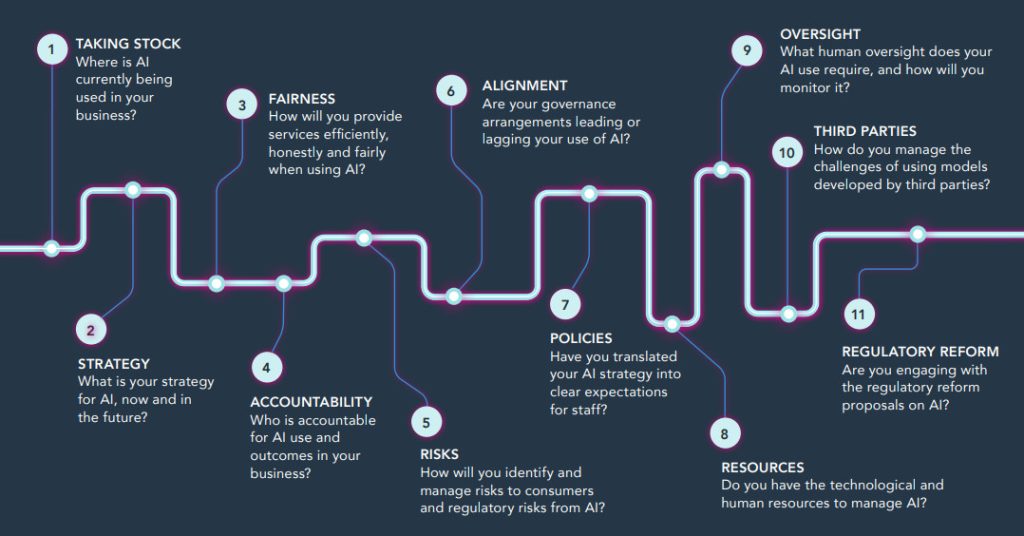
The pace of AI adoption can easily outstrip the development of internal controls, leading to compliance gaps and operational vulnerabilities. Many organisations are deploying AI tools without fully understanding the risks associated with model bias, data privacy, and regulatory expectations. ASIC’s recent commentary highlights that poor documentation and a lack of human oversight can result in regulatory breaches and undermine client trust. In particular, firms that fail to map out their AI use cases or establish clear governance frameworks may struggle to demonstrate compliance during an audit or investigation.
To address these challenges, ASIC and other regulators recommend a structured approach to AI governance. Start by mapping all current and planned AI use cases within your organisation, ensuring each application undergoes risk assessment and approval. Review and update your governance frameworks to include specific provisions for AI, such as model validation, data privacy controls, and escalation procedures for potential issues. Training staff on responsible AI practices is essential, as is maintaining clear documentation of all AI-driven decisions. Regular audits and ongoing education will help ensure that your organisation remains compliant as technology evolves. Well-governed AI not only boosts operational efficiency but also enhances regulatory confidence. Firms that invest in robust oversight and transparent documentation are better positioned to leverage AI’s benefits while minimising risk. Demonstrating a commitment to responsible AI practices can also strengthen client relationships and support long-term business growth.
Consequences of Inaction:
Poor oversight of AI systems can result in regulatory breaches, enforcement action, and loss of client trust. ASIC’s guidance makes it clear that firms failing to address AI governance risks may face significant penalties and reputational harm. In today’s fast-moving regulatory environment, the cost of inaction is simply too high.
Call to Action:
Don’t wait for a compliance gap to emerge. Let AICS help you strengthen your governance frameworks, navigate the complexity of AI adoption and train your team on responsible AI compliance practices.
References: